


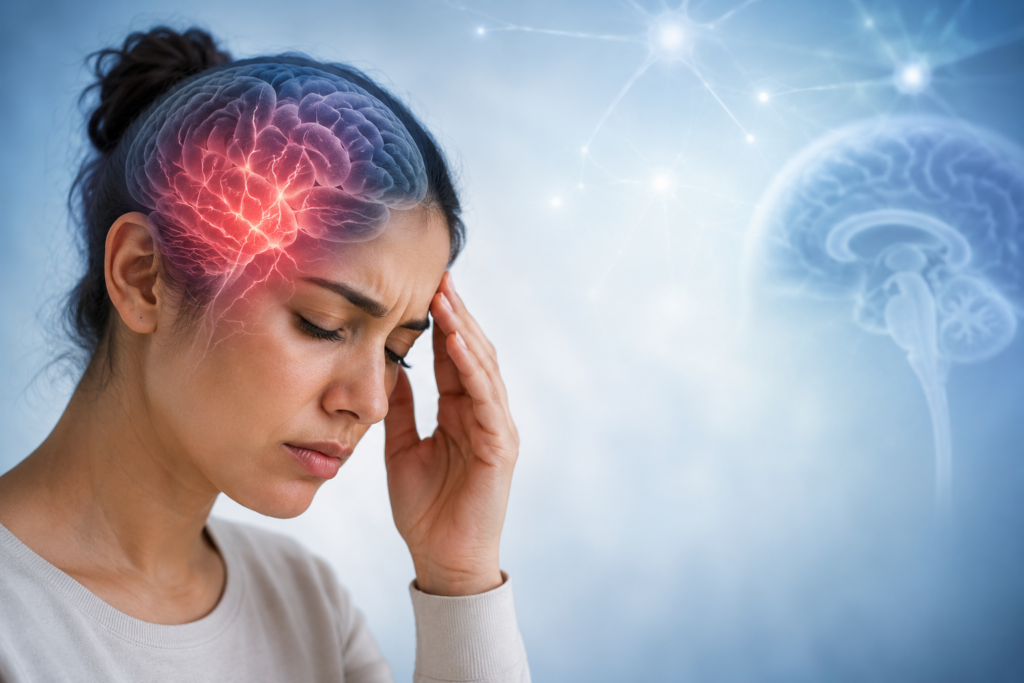
In the vast majority of cases, a migraine is not a sign of a dangerous brain disease. Migraine is a neurological condition in which the brain functions abnormally for a period of time, yet remains structurally healthy. In rare situations, however, a severe headache may indicate an underlying problem such as a tumour, a bleed, or an infection. The warning signs include a sudden “thunderclap” headache, pain that worsens steadily over weeks, loss of vision, weakness on one side of the body, seizures, or a first-ever headache after the age of fifty. If your migraine symptoms have changed in pattern or feel unlike anything you have experienced before, a consultation with a neurologist in Hyderabad offers both clarity and timely protection.
What Is a Migraine?
Anyone who has watched a loved one retreat into a dark, silent room in the middle of the day understands that a migraine is far more than an ordinary headache. It is a neurological event that briefly takes over the entire body, with head pain at its centre.
A typical attack begins with a throbbing, pulsating pain, most often on one side of the head. It is frequently accompanied by:
- Nausea or vomiting
- Heightened sensitivity to light, sound, and sometimes smell
- Visual disturbances known as “aura” — shimmering lines, flashing spots, or temporary blind patches
- Fatigue and difficulty concentrating that may linger for a day after the pain subsides
An episode can last anywhere between four hours and three days. Migraine also has a strong hereditary component; a person whose parent suffers from migraines carries a significantly higher likelihood of developing them as well.
Is Migraine a Brain Problem?
The answer is both yes and no, and the distinction is an important one. Physicians broadly classify brain disorders into two categories:
| Type | What It Means | Examples |
| Neurological (functional) | The brain’s signalling and electrical activity behave abnormally, while its structure remains normal | Migraine, epilepsy |
| Structural | A physical abnormality exists within the brain itself | Tumour, haemorrhage, clot, infection |
Migraine belongs firmly to the first category. During an attack, the brain becomes temporarily hyper-excitable: nerve pathways fire abnormally, blood vessels surrounding the brain react, and pain-signalling chemicals are released. A useful comparison is a fire alarm sounding in a building where no fire exists — the alarm is loud and disruptive, but the building itself is undamaged.
This explains why brain scans of long-term migraine sufferers so often return entirely normal. The result does not suggest that the pain is imagined; it confirms that migraine disturbs function without damaging structure.
The most common migraine causes and triggers include:
- hormonal fluctuations
- missed meals
- inadequate sleep
- prolonged stress
- dehydration
- bright or flickering light, and certain foods.
In simple terms, genetics creates the susceptibility, and triggers set the attack in motion.
Can a Migraine Be a Sign of Something Serious?
For most people, the answer is reassuring. Migraine is a medical condition in itself, not a symptom of hidden disease. Millions of people experience migraine attacks for years, and their brains remain completely healthy. If your headaches have followed the same pattern for a long time, there is usually nothing to fear.
However, in rare cases, a headache can be caused by an underlying problem in the brain. Doctors call this a secondary headache. Conditions such as tumours, bleeding, or infections can sometimes produce head pain that resembles a migraine. These cases are uncommon, but recognising them early is important, because early diagnosis leads to better treatment.
This is not a reason to panic with every attack. It is simply a reason to stay aware. When you know your usual headache well, any real change becomes easy to notice. Doctors follow the same logic. A severe headache that matches your usual pattern is rarely a concern. A headache that is new, different, or steadily worsening deserves a closer look.
In short, serious causes are rare. Routine migraine attacks do not need anxiety — they need awareness. Know your pattern, and consult a doctor whenever that pattern changes. The next sections explain exactly which changes to watch for.
Brain Conditions That Mimic Migraine
A small number of conditions can imitate migraine, which is precisely why an accurate diagnosis is essential:
- Brain tumours — Tumour-related headaches are typically worse in the morning, intensify over weeks, and appear alongside other brain tumor symptoms such as seizures, personality changes, vomiting without nausea, or weakness in a limb.
- Aneurysm or brain haemorrhage — Produces a sudden, explosive “thunderclap” headache that reaches peak intensity within seconds. This is a medical emergency.
- Meningitis — Headache accompanied by high fever, a stiff neck, and drowsiness.
- Cerebral venous thrombosis — A clot in the brain’s veins, seen more often in women using hormonal medication or in the weeks after childbirth.
- Raised intracranial pressure — Headache with visual disturbances, frequently affecting young women.
- Stroke or transient ischaemic attack — Sudden weakness, slurred speech, or facial drooping occurring alongside head pain.
A pattern emerges from this list: nearly all of these conditions arrive with additional signs — fever, weakness, seizures, or confusion. A true migraine, however distressing, rarely brings such companions. Familiarity with brain tumor symptoms should therefore reassure rather than alarm, because it allows sufferers to recognise that their routine attacks bear no resemblance to them.
Warning Signs to Watch For
Neurologists rely on a well-established set of red flags. If any of the following applies, medical evaluation should not be delayed:
- A sudden, worst-ever headache that peaks within seconds
- A headache that steadily worsens over days or weeks
- A first-ever headache after the age of fifty
- Headache accompanied by fever, neck stiffness, or a rash
- Weakness, numbness, or difficulty speaking
- Seizures or episodes of fainting
- Loss of vision or double vision that does not resolve
- A headache that wakes you from sleep or is most intense on waking
- A clear change in your established migraine symptoms — a new pattern, a new side, or a new character of pain
A simple principle is worth remembering: a familiar, long-standing headache is generally safe; a new or noticeably different headache requires a doctor’s opinion.
Diagnosis: How Doctors Find the Cause
Many patients assume that a headache consultation leads directly to expensive scans. In reality, diagnosis begins with careful conversation and clinical examination, and imaging is reserved for cases that genuinely require it.
1. Medical history — The physician explores when the headaches began, where the pain is located, what provokes it, and whether close relatives are affected. This discussion alone resolves most of the diagnostic puzzle. Maintaining a headache diary before the appointment adds considerable value.
2. Neurological examination — An assessment of the eyes, reflexes, muscle strength, balance, and coordination. When the examination is normal and the history fits migraine, further testing is often unnecessary.
3. MRI — Requested when red flags are present. It provides a detailed image of brain tissue and reliably excludes tumours, clots, and other structural abnormalities.
4. CT scan — Faster than MRI, and therefore the preferred investigation in emergencies, particularly for detecting bleeding.
5. Additional tests (only when indicated) — Blood investigations, a lumbar puncture to examine spinal fluid, or specialised vessel imaging, each reserved for specific clinical suspicions.
Patients with typical migraine symptoms and a normal examination frequently require no scan at all.
When Should You See a Neurologist?
Specialist consultation is advisable when:
- Headaches occur more than four times a month
- Over-the-counter medication has become ineffective, or is being used almost daily
- Attacks interfere with work, education, or family responsibilities
- Any of the red flags described above appears
- You wish to replace uncertainty with an accurate diagnosis and a structured plan
Can You Prevent Migraines?
While no permanent cure exists, the majority of sufferers can reduce the frequency and severity of attacks considerably through a combination of discipline and appropriate medical care.
Lifestyle
The migraine-prone brain responds best to consistency.
- Maintain fixed sleeping and waking hours, including on weekends
- Eat meals at regular times and avoid prolonged fasting
- Drink two to three litres of water daily
- Exercise regularly; even a thirty-minute daily walk offers measurable benefit
- Manage stress through yoga, breathing techniques, or structured relaxation
Triggers
Every individual has a personal set of triggers, best identified through a headache diary. Common ones include:
- Harsh sunlight and flickering screens
- Aged cheese, chocolate, monosodium glutamate, and excess caffeine
- Hormonal changes around the menstrual cycle
- Strong perfumes and chemical odours
- Oversleeping on holidays
Treatment
Modern migraine treatment works on two levels: stopping an attack that has already started, and reducing how often attacks occur.
Acute treatment (relief during an attack)
- Simple pain relievers such as paracetamol or NSAIDs, which work well for mild to moderate attacks
- Anti-nausea medicines, often given alongside painkillers
- Triptans, which are migraine-specific medicines and remain the most widely used prescription option
- Newer CGRP-blocking tablets (gepants), useful for patients who cannot take triptans or do not respond to them
Timing matters greatly here. Acute medicines work best when taken at the very first sign of an attack, not after the pain has fully developed. At the same time, using painkillers too often more than two or three days a week can itself cause a condition called medication-overuse headache. This is one of the most common mistakes patients make.
Preventive treatment (reducing attack frequency)
Preventive therapy is considered when attacks occur four or more times a month, or when they severely disrupt daily life. Options include:
- Blood pressure medicines such as beta-blockers
- Certain antidepressants and anti-seizure medicines, used in low doses for migraine
- Newer CGRP-targeted injections and tablets, designed specifically for migraine prevention
- Botulinum toxin injections, reserved for chronic migraine (fifteen or more headache days a month)
With the right preventive medicine, many patients see their attack frequency fall by half or more. No single drug suits everyone, and finding the right one sometimes takes patience. This is exactly why a proper migraine treatment plan should be built with a specialist rather than through self-medication.
Frequently Asked Questions
1. Are frequent migraines a sign of a brain tumour?
Very rarely. Tumour-related headaches worsen steadily over weeks and are accompanied by other brain tumor symptoms such as seizures or limb weakness. A stable migraine pattern spanning years is a reassuring sign.
2. Can migraines cause permanent brain damage?
No. Migraine is a functional disturbance rather than a destructive disease. Attacks are painful but do not injure brain tissue.
3. Is an MRI necessary for every migraine patient?
No. Imaging is recommended only when red flags exist — sudden onset, a changing pattern, abnormal neurological findings, or new headaches after the age of fifty.
4. Why do migraines occur around the menstrual period?
The fall in oestrogen levels shortly before menstruation is among the most common migraine causes in women. Preventive strategies timed to the cycle can be highly effective.
5. When does a headache become an emergency?
A thunderclap headache, or a headache accompanied by fever with neck stiffness, weakness, slurred speech, or seizures, requires immediate emergency care.
6. Can children develop migraines?
Yes. In children, attacks are often shorter and may present with abdominal pain and vomiting rather than prominent head pain. A paediatric evaluation confirms the diagnosis.
7. Do migraines improve with age?
For many individuals, yes. Attacks frequently become less severe after menopause or in later decades, although the course varies from person to person.
Conclusion
So, can a migraine be a sign of a brain problem? In a technical sense, migraine is indeed a condition of the brain — but a functional one, not a dangerous structural disease. The overwhelming majority of sufferers have healthy brains that are simply more sensitive than most.
What matters is the ability to distinguish between a familiar attack and something new. A severe headache that breaks an established pattern, arrives without warning, or brings weakness, visual changes, or fever deserves prompt medical evaluation rather than another painkiller and quiet hope.
Equally important, regular migraine attacks should never be accepted as an unavoidable part of life. Effective treatment exists, and it begins with a single consultation with the right specialist.
Related Reads & Treatment Pages
- Neuro Surgery at Sai Sanjeevini Hospitals
- Advanced Radiology & Diagnostic Facilities
- About Sai Sanjeevini Super Speciality Hospital
Book a Consultation Today
If headaches have begun to dictate the terms of your daily life, it is time to seek answers rather than endure in silence.
Sai Sanjeevini Super Speciality Hospital — Plot No. V–7, NH–9, Narsimhapuri Colony, Kothapet, Saroornagar, Hyderabad – 500035
Call: +91 88971 61616 Book an Appointment Online
4 Responses