


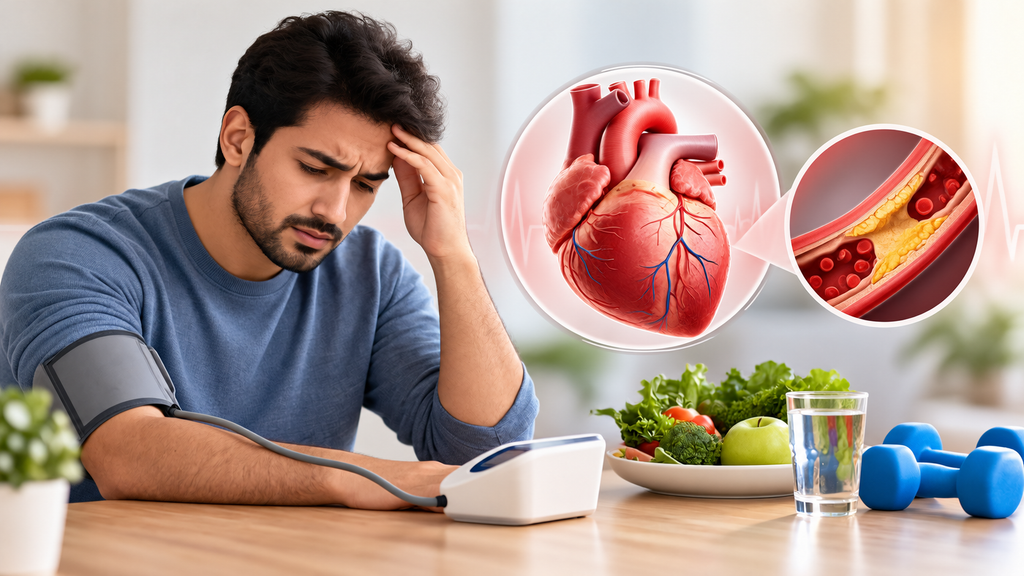
High blood pressure has quietly become one of the most common conditions we simply live with. “It’s just stress,” we say. “It runs in the family.” “I’ll get it checked next month.”
That casual attitude is exactly what makes this condition so dangerous.
This article walks through the high blood pressure symptoms most people overlook, why early detection matters so much, and what practical steps actually help — explained simply, without heavy medical jargon.
This article is for general awareness only and is not a substitute for professional medical advice. Please consult a qualified physician for diagnosis and treatment.
High blood pressure, or hypertension, often shows up through subtle clues like frequent headaches, dizziness, blurred vision, nosebleeds, and unusual fatigue, signs most people mistake for everyday tiredness or stress. Left unchecked, these hypertension symptoms can silently damage your heart, kidneys, and brain over time.
The good news? Regular BP checks, lifestyle tweaks, and timely BP treatment can keep things well under control. If you’ve been feeling “off” lately such as foggy, breathlessness, unusually irritable then it’s worth getting your numbers checked rather than waiting it out. Catching it early is the single biggest thing you can do for your long-term cardiovascular health.
Understanding High Blood Pressure
A simple way to understand it: when pressure inside a pipe stays too high for too long, the pipe walls gradually weaken and wear out. Your arteries respond in much the same way under sustained high pressure.
Blood pressure is measured using two numbers:
Systolic -the pressure when your heart beats
Diastolic – the pressure when your heart rests between beats.
A reading below 120/80 mmHg is considered normal. Anything consistently at or above 140/90 mmHg is classified as hypertension.
Here’s the tricky part: your arteries don’t come with a warning light. They just keep absorbing the extra strain, day after day, year after year which is exactly why doctors call hypertension the “silent” condition. You could be walking around with dangerously elevated numbers and feel completely fine.
What Causes High Blood Pressure?
It’s usually a mix of habits, genetics, and everyday choices stacking up over time.
Common contributors include:
- Excess salt in your diet (yes, those pickles and chips add up)
- Sedentary lifestyle with little to no physical movement
- Chronic stress and poor sleep patterns
- Obesity or carrying extra weight around the midsection
- Smoking and excessive alcohol consumption
- Family history of hypertension
- Underlying kidney disease or hormonal imbalances
- Excessive caffeine intake
Some of these you can control. Others, like genetics, you simply have to stay watchful about. Either way, awareness is your first line of defence.
Why Early Detection Actually Matters
Much like a small structural crack left unrepaired eventually leads to major damage, untreated hypertension causes gradual, cumulative harm to your organs often without any obvious warning along the way.
Left unmanaged, high blood pressure can lead to:
| Organ Affected | Potential Long-Term Damage |
| Heart | Heart attack, heart failure, thickened heart muscle |
| Brain | Stroke, memory decline, cognitive impairment |
| Kidneys | Chronic kidney disease, kidney failure |
| Eyes | Blurred vision, retinal damage |
| Arteries | Aneurysm, atherosclerosis |
Catching elevated numbers early even before you feel unwell gives you a real shot at reversing the trend through lifestyle changes alone, rather than a lifetime of medication and hospital visits. This is the entire logic behind cardiovascular health screening: prevention is dramatically easier than repair.
High Blood Pressure Symptoms Most People Ignore
This is the part that really deserves your attention. Most people picture hypertension as something dramatic like chest-clutching, dramatic collapse, ambulance sirens. In reality, the high blood pressure symptoms are far quieter, and that’s precisely what makes them so easy to dismiss.
Watch out for:
- Persistent headaches, especially at the back of the head, that don’t go away with regular painkillers
- Dizziness or light-headedness, particularly when standing up quickly
- Blurred or double vision that seems to come and go
- Unexplained fatigue, even after a full night’s sleep
- Shortness of breath during light activity
- Nosebleeds that happen without any obvious cause
- Pounding sensation in the chest, neck, or ears
- Flushed face for no apparent reason
- Irritability or anxiety that feels out of proportion
Notice how every single one of these could easily be blamed on “just a rough week”? That’s the trap. If two or more of these keep showing up together, it’s not stress talking, it’s your body waving a small red flag.
How to Reduce High Blood Pressure
Here’s where things get genuinely hopeful. Hypertension responds beautifully to consistent, small changes. You don’t need to overhaul your entire life overnight.
Practical steps that actually move the needle:
- Cut back on sodium — swap packaged snacks for fresh fruit, and go easy on pickles and papads.
- Move your body daily — even a brisk 30-minute walk works wonders for blood pressure management.
- Prioritise sleep — aim for 7–8 hours; poor sleep quietly spikes BP readings.
- Manage stress — breathing exercises, short meditation breaks, or simply stepping outside for five minutes.
- Limit alcohol and quit smoking — both directly stiffen artery walls over time.
- Watch your weight — even a 5% reduction in body weight can meaningfully lower readings.
- Track your numbers — a home BP monitor is a small investment with a big payoff.
None of this is glamorous advice. But consistency beats intensity every single time when it comes to blood pressure management.
Diagnosis and Treatment
Diagnosis is straightforward, a BP cuff reading takes only a few minutes. Doctors typically confirm hypertension after multiple readings across separate visits, since a single elevated reading can sometimes reflect temporary anxiety at the clinic, a recognised phenomenon known as “white coat syndrome.”
Once confirmed, your doctor may recommend:
- Blood tests to check kidney function, cholesterol, and blood sugar
- An ECG or echocardiogram to assess heart health
- Urine tests to rule out kidney involvement
- Lifestyle counselling paired with medication, if needed
Results & Recovery Timeline
Patience matters here. Blood pressure doesn’t drop overnight, and it shouldn’t. Sudden crashes can be just as risky as the high readings themselves.
A realistic timeline looks something like this:
- Week 1–2: Minor improvements from dietary changes and reduced salt intake
- Week 4–6: Noticeable stabilisation with consistent exercise and stress management
- Month 3: Significant improvement in readings for most lifestyle-driven cases
- Ongoing: Regular monitoring becomes a lifelong habit, not a temporary fix
For patients on medication, doctors typically reassess dosage every few weeks initially, fine-tuning until readings settle into a healthy, stable range. Recovery isn’t a finish line, it’s a rhythm you maintain.
Frequently Asked Questions
1. What is considered a dangerously high blood pressure reading?
A reading of 180/120 mmHg or higher is considered a hypertensive crisis and needs immediate medical attention.
2. Can high blood pressure symptoms appear suddenly?
Yes, though it’s uncommon. Sudden, severe symptoms like intense headache, chest pain, or vision loss require emergency care right away.
3. Is high blood pressure reversible?
In many early-stage or lifestyle-driven cases, yes, consistent changes in diet, activity, and stress levels can bring numbers back to a healthy range.
4. How often should I check my BP if I have no symptoms?
Adults over 30 should ideally check every 3–6 months, even without symptoms, since hypertension often shows no warning signs at all.
5. Does stress alone cause hypertension?
Stress can temporarily spike blood pressure, and chronic stress contributes to long-term risk, but it’s usually one factor among several.
6. Can young adults get high blood pressure too?
Absolutely. Poor diet, sedentary habits, and high stress levels mean hypertension is increasingly common even in people under 35.
7. When should I see a heart specialist for BP concerns?
If your readings stay elevated across multiple checks, or you notice symptoms like chest discomfort or breathlessness, book a consultation without delay.
Conclusion
High blood pressure rarely announces itself with obvious warning signs. It shows up through small, easily dismissed moments like a headache here, a dizzy spell there, until those signs eventually become harder to ignore. Early attention is the single biggest advantage you have.
Pay attention to what your body is telling you. Address the habits within your control. And treat regular BP checks as routine preventive care, not something reserved for when symptoms become severe.
At Sai Sanjeevini Super Speciality Hospital in Dilsukhnagar, Hyderabad, our Nephrology and Critical Care specialists regularly manage patients whose high blood pressure is linked to kidney function or requires close monitoring. Since sustained hypertension is also a leading risk factor for heart disease, our team works in coordination with a heart specialist in Hyderabad when cardiac evaluation is needed, so your BP treatment plan addresses the full picture, not just the number on the monitor.
Related Reads:
- Can Migraine Be a Sign of a Brain Problem?
- 10 Early Brain Stroke Symptoms You Shouldn’t Ignore
- When Does Back Pain Need an Orthopedic Doctor?
- Our Specialities & Treatments
Don’t Wait for the “Big” Symptom
If any of this sounds a little too familiar, take it as your sign. Your cardiovascular health deserves more than a “let’s see how it goes” approach.
Book a Consultation with Sai Sanjeevini Super Speciality Hospital today and get your blood pressure checked by a team that actually listens.